

Keihanna University Summit
~Exploring the Future in Keihanna Science City~
Program Overview
9:00 AM – 9:00 PM
9:00 AM – 9:00 PM
Purpose of the Summit
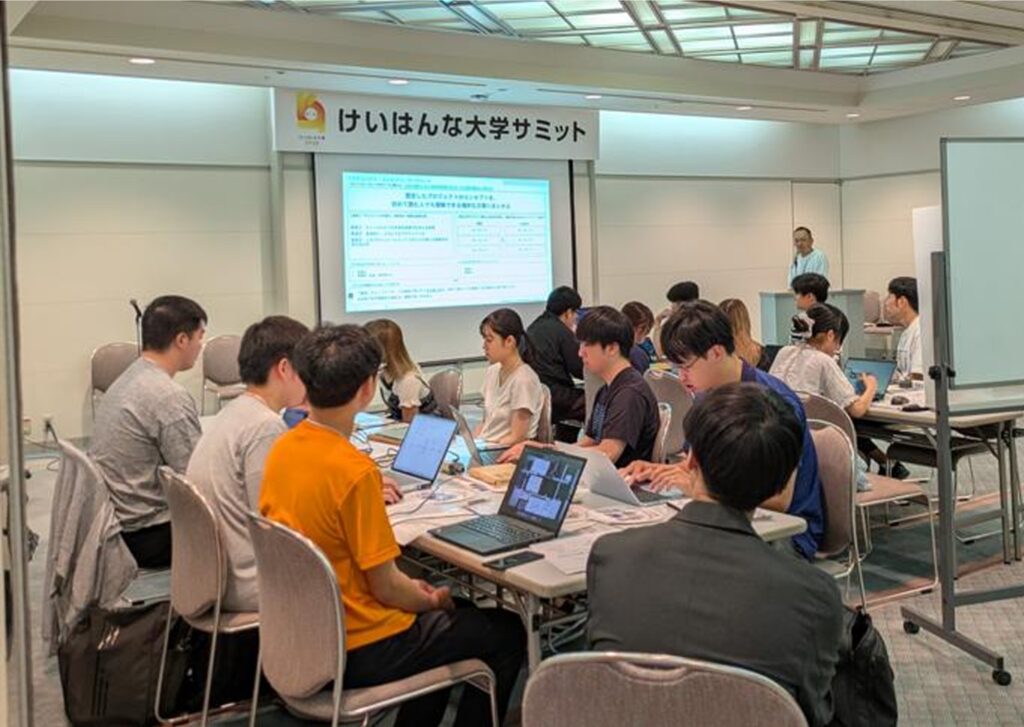
“Keihanna University” (tentative name) is a co-creation platform. It will be developed as a place—an agora—where students, companies, universities, citizens, and local governments can participate, discover new value, and turn ideas into concrete forms. By going beyond the boundaries of existing academic fields and organizations, it aims to nurture people who can envision and create the future with their own hands.
Overview of the “Keihanna University Summit” at Keihanna Expo 2025
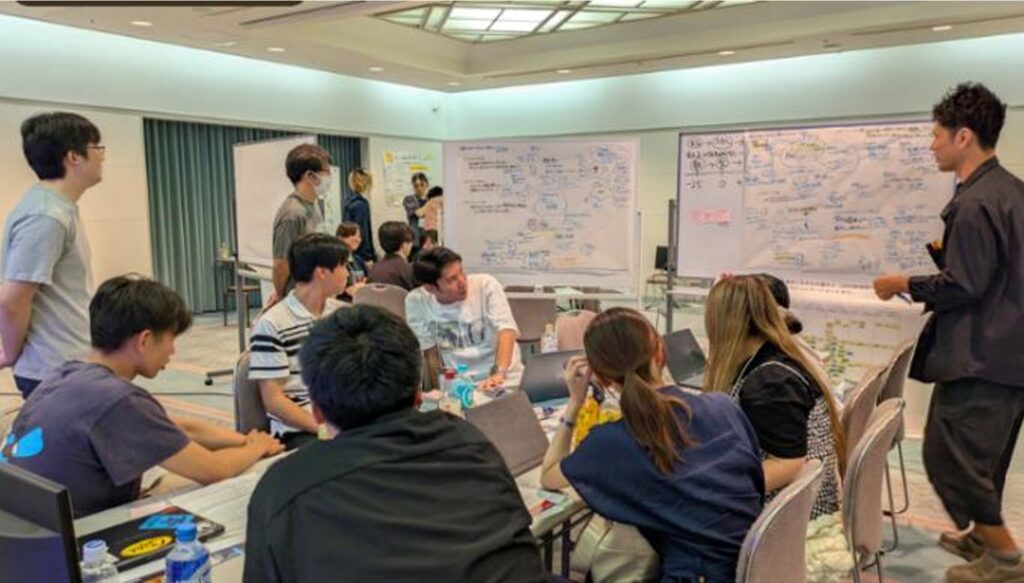
As a first-time initiative, 24 undergraduate and graduate students from universities across Japan took part in the program. Since June, they have been learning methods for reading future trends through the “Future Insight Seminar.” During the residential summit held at Keihanna Plaza from September 8 to 11, participants envisioned the future they want to create and shared ideas for making it a reality.
Outcomes and Future Developments
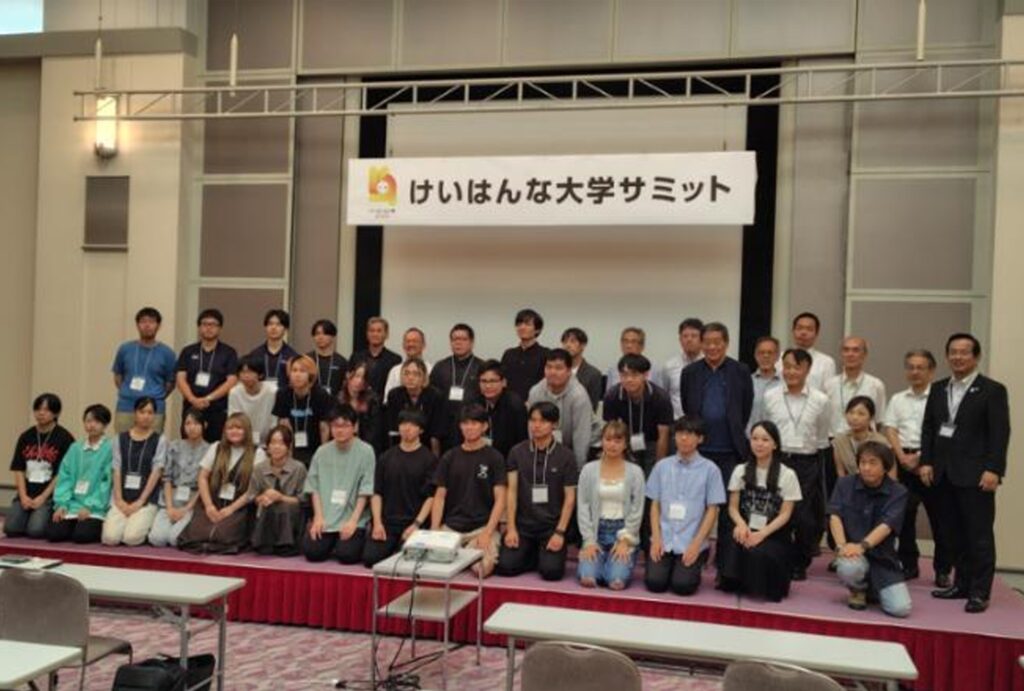
The students presented the outcomes of their discussions by team. These ideas were later compiled and presented at the Keihanna Expo 2025 Closing Ceremony on October 11 under the title “Toward the Keihanna Declaration: Proposals from the Younger Generation.”
Program Details
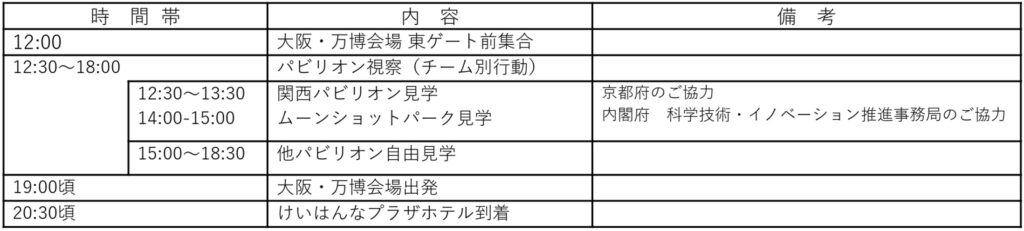
September 8 (Mon): Visit and Study Tour at the Osaka-Kansai Expo Site on Yumeshima
Participants split into small groups to visit the Osaka-Kansai Expo. Through the group visit, they experienced the Expo while deepening exchanges with other members, sharing not only their interests and impressions but also questions about the future, and broadening their global perspectives.
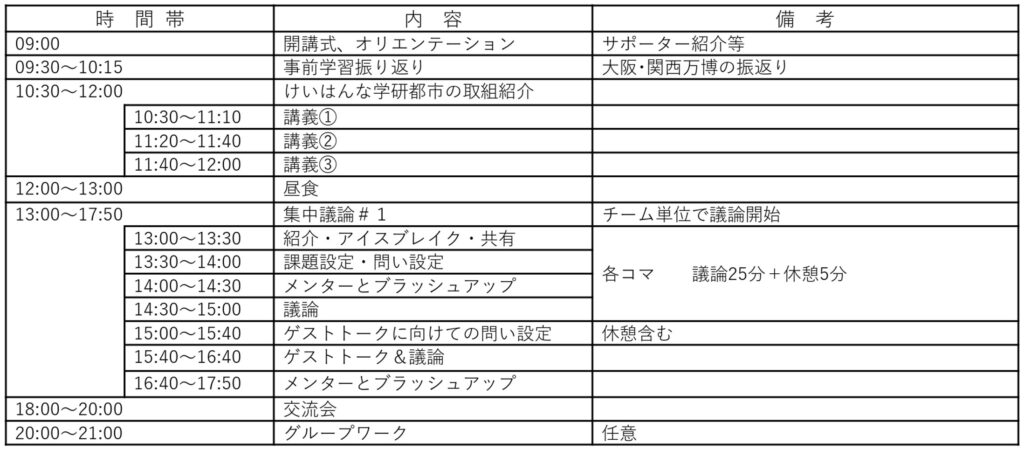
September 9 (Tue): Workshops by Participating Students and Lectures by Instructors
Workshop Day 1: Brush-up Day
Venue: Keihanna Plaza, Yellow River Hall
Participants learned about initiatives by organizations active in Keihanna Science City, gaining a renewed awareness of the area’s potential while sharpening their future-oriented perspectives and deepening their understanding of the workshop.
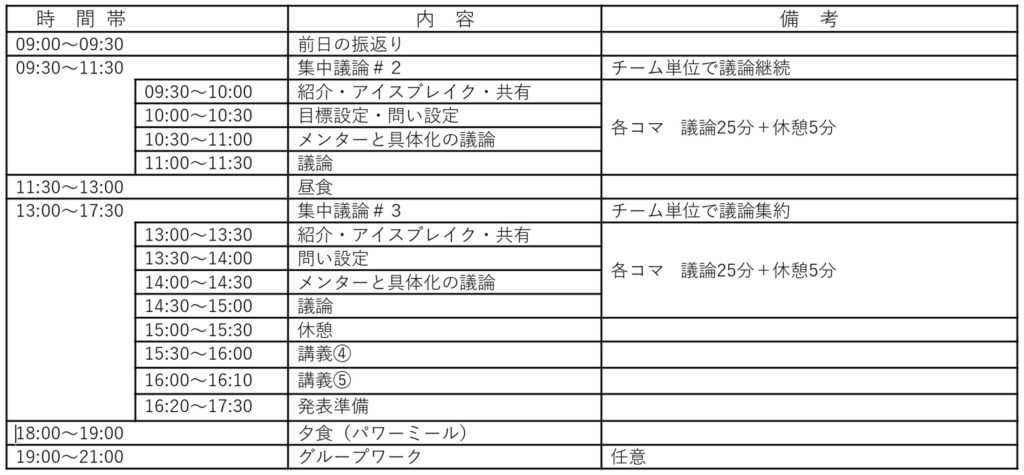
September 10 (Wed): Workshops by Participating Students and Lectures by Instructors
Workshop Day 2: Back-Casting Day
Venue: Keihanna Plaza, Huang He Hall
Participants deepened their understanding of the workshop while recognizing the challenges involved in building a sustainable society and considering initiatives that support venture companies and help foster momentum for startups to create new business opportunities.
September 11 (Thu): Final Day — Presentations and Closing
Venue: Keihanna Plaza, Nile Hall
Participants gave their final presentations, followed by the closing session.

Final Report
Introduction: Toward an “Experimental Zone” for Imagining and Creating the Future
The Keihanna University Summit was a future-oriented inquiry led by young people, based on the outcomes of the “Future Insight Seminar,” a joint research project conducted with the Hakuhodo Research Design Center. In a society facing population decline and the reality of contraction, the summit asked how we can redefine human-centered richness and create new value.
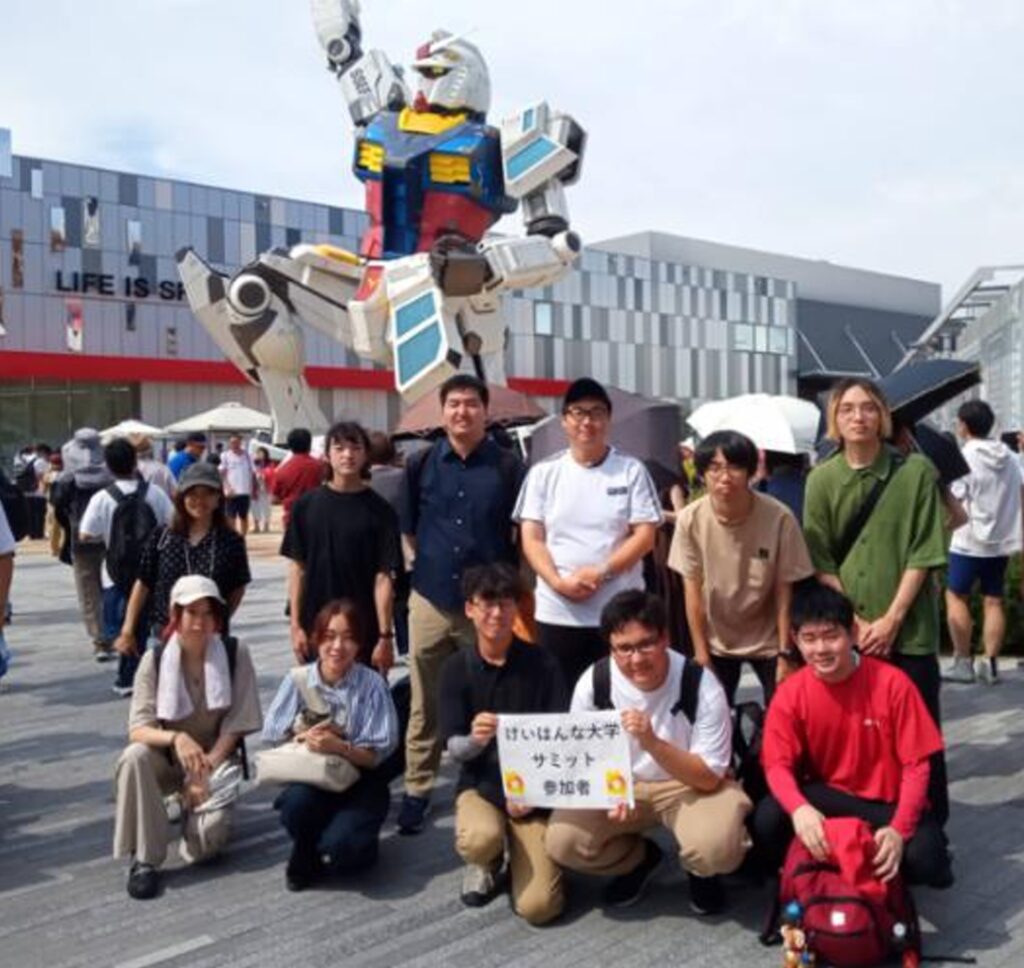
From September 8 to 11, 2025, 24 students from across Japan, together with five instructors, nine mentors, and many other participants, gathered at Keihanna Plaza for passionate discussions on how Keihanna can become an “experimental zone for the future.”
The participating students came from schools throughout Japan, bringing together diverse knowledge across different academic fields and regions. The summit marked the first step toward enabling students to design the future with their own hands and implement their ideas in society.
Working under the three themes of “Learning,” “A Place to Belong,” and “Politics,” the students presented visions for overcoming today’s social challenges, along with concrete projects to make those visions a reality.
About the “Future Insight Seminar”
The “Future Insight Seminar” is a joint research project conducted by Hakuhodo, Professor Shoji Komai of International Professional University of Technology in Tokyo, and 20 students from six universities: International Professional University of Technology in Tokyo, Doshisha University, Iwate Prefectural University, Osaka Electro-Communication University, Kyoto University, and Kindai University.
Through the Future Insight approach, the project explores new visions of richness in a shrinking Japan in 2050. Held every Wednesday from 11:00 AM to 1:00 PM from June to October 2025, the seminar combined communication with the themes of “Learning,” “A Place to Belong,” and “Decision-Making,” using group work to generate ideas. Fourteen draft “future scenarios” were developed.
※博報堂研究デザインセンターについて
About the Hakuhodo Research Design Center
The Hakuhodo Research Design Center is Hakuhodo’s research and development organization, established in 2024. It includes the Institute of Life and Living, Hakuhodo’s flagship research institute established in 1981, and the Institute of Sei-katsu-sha Thinking Technology, newly established in September 2024 to conduct research and development that promotes sei-katsu-sha thinking among client companies.
The Center advances the further evolution of sei-katsu-sha thinking, one of Hakuhodo’s key strengths. Under the Institute of Sei-katsu-sha Thinking Technology, a wide range of research functions and projects have come together to form a collective of research and development teams.
Official website: https://hakuhodo-rdc.com/
About Future Insight
Future Insight is both a methodology and a set of activities for developing future outlooks for organizations and individuals. In addition to forecasts built up from the past, it captures uncertain signs of change that may create major shifts in the future, and uses backcasting to shape future perspectives.
Official website: Future Insight | Research Design Center | Hakuhodo
- “Learning” Team: Exploring New Forms of Happiness Together with AI
The “Learning” Team did not view the future of learning brought about by technological progress as something negative that would cause people to lose their humanity. Using the methods developed through Hakuhodo’s Future Insight Seminar, the team proposed that in a future where AI supplements knowledge and supports efficient learning, what humans should pursue is the ability to generate questions.- Project Concept:The team proposed a new view of education: “education that enhances the emotional intelligence quotient, or AIQ.” In this model, AI customizes learning according to each person’s individuality and abilities, helping to raise self-esteem and overall happiness.
- The Students’ Vision:This concept is not simply about aiming for good grades. It explores a new form of self-realization in which people learn together with AI as a “partner for the mind” and pursue their own unique happiness. The idea of redefining repeating a school year as “positive retention” also reflects the honest desire of young people to shape their lives at their own pace, without fearing the idea of stepping off the rails of a competitive society.
- “A Place to Belong” Team: Overcoming Constraints and Weaving Diverse Connections
The “A Place to Belong” Team envisioned a future in which people are freed from the constraints of physical location and human relationships, allowing everyone to find a place where they can truly be themselves. Based on the “signs of the future” identified through Hakuhodo’s Future Insight Seminar, the team viewed advances in AI and MR (mixed reality) technology as tools for easing loneliness and creating new forms of connection.- Project Concept:The team proposed “Anywhere MR,” a concept that uses MR technology to merge physical and virtual spaces, allowing people to choose where they belong without being limited by location. They also proposed creating new forms of belonging beyond human relationships, such as communicating with animals by applying the abilities of regenerative organisms.
- The Students’ Vision:This concept is not merely about expanding communities. It presents a new set of values that cherishes serendipity and encourages people to seek connections through their own intuition. By removing physical constraints, the idea reflects young people’s strong desire for diverse connections that bring genuine emotional comfort in a modern society where loneliness is increasingly common.
- “Politics” Team: A Sense of Ownership Creates the Future
The “Politics” Team used insights gained through Hakuhodo’s Future Insight Seminar to rethink the future of decision-making brought about by advances in information technology. Rather than leaving decisions to a small group of experts, the team sought to transform decision-making into something that every citizen can engage with as a matter that concerns them personally.- Project Concept:The team proposed ideas such as the “Metaverse Diet: Jisso Space,” where people can experience policy in the metaverse, and a “matching voting system,” in which AI recommends candidates who align with voters’ values.
- The Students’ Vision:These ideas were born from young people’s desire to lower the barriers to political participation and to feel that their voices are reflected in society. Rather than simply trying to raise voter turnout, the team explored a new form of democracy: one that brings politics closer to everyday life and builds an inclusive society supported by each person’s sense of ownership.
Conclusion: Toward the Fulfillment of Self and Others, the Individual and the Many
Keihanna as a Hub for Imagining and Creating the Future
The Keihanna University Summit was an opportunity for young people to imagine and create “new forms of richness in a shrinking Japan,” not only as abstract concepts but also as concrete projects. It offered a small but meaningful step toward opening up a society where people can give shape to their own will and aspirations, and feel a sense of purpose in their own existence. Their ideas convey a powerful message: by making full use of technology and freeing themselves from social constraints, people can create rich ways of living that are true to themselves.
Building on this summit, the Keihanna area will continue to carry out various initiatives and develop as a “Sozo Zone” — a place for both imagining and creating — where students, young people, and many others can give shape to their ideas. We are confident that the passion and vision of these young people will become a foundation for Keihanna’s future.